Technique
Kitchen tips worth keeping
None of these are secrets. They are simply the habits that separate a good dish from a flat one, collected as we learned them.
Heat
Control the heat, not the clock
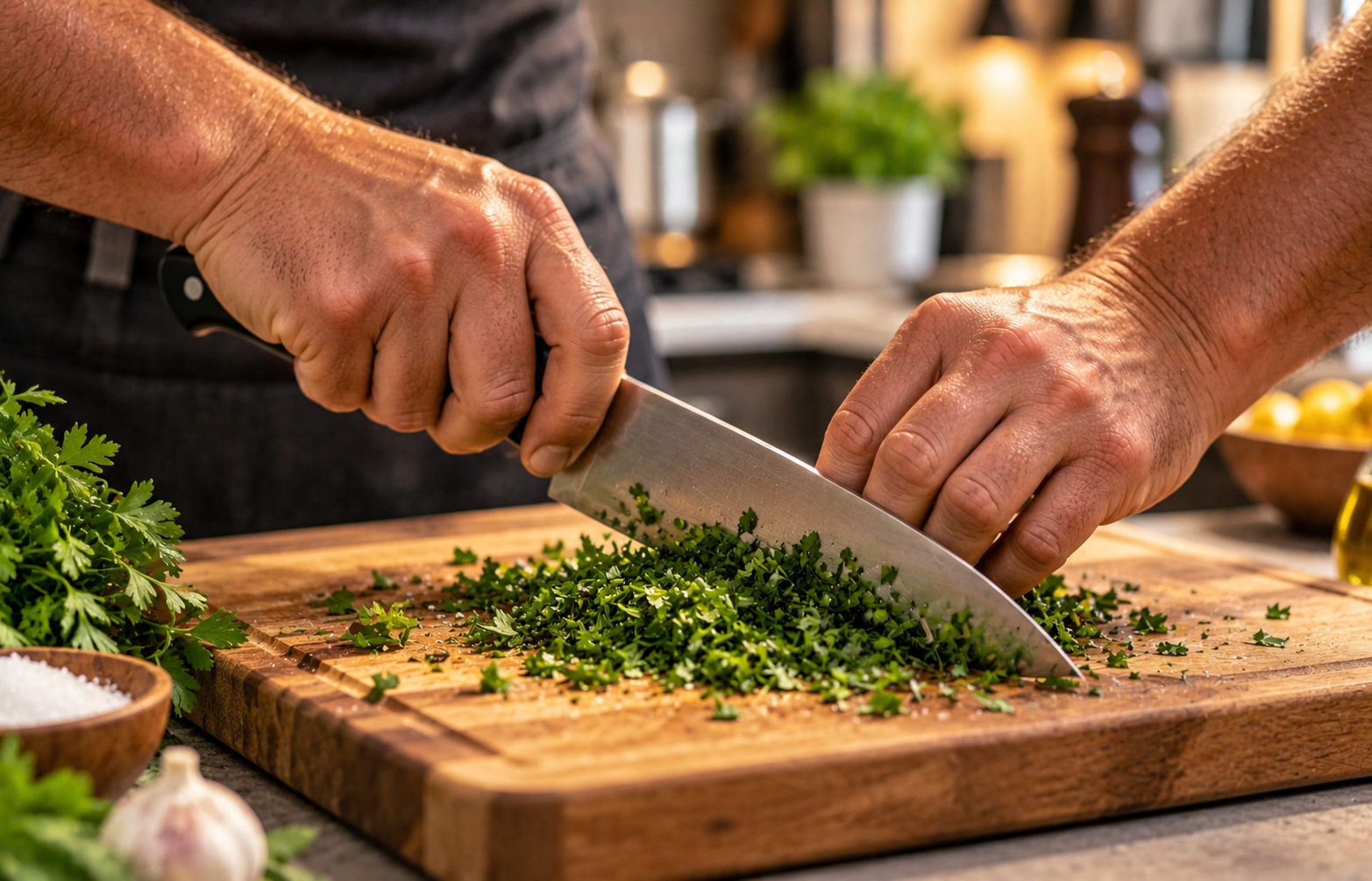
Heat is the engine of flavor. Manage it well and you get browning, tenderness, and balance; chase time blindly and you get scorched, pale, or broken food.
Heat principles
- 1
Preheat the pan first
Give your skillet time to heat before adding food when searing or sautéing.
- 2
Hot doesn't mean smoking
Oil should usually shimmer rather than produce clouds of smoke. Smoking can indicate that you've exceeded the oil's useful cooking temperature.
- 3
Don't crowd the pan
Too much food lowers the surface temperature and traps moisture, causing ingredients to steam instead of brown.
- 4
Use high heat for searing
A properly heated pan helps create a flavorful browned crust on meat and vegetables.
- 5
Lower the heat for delicate sauces
Cream and cheese sauces can separate or scorch when subjected to excessive heat.
- 6
Let the pan recover
When cooking multiple batches, allow the pan to return to the proper temperature before adding the next batch.
- 7
Control heat instead of chasing time
If food is browning too quickly, reduce the temperature rather than blindly following the recipe's stated cooking time.
- 8
Use residual heat
Food continues cooking after leaving the burner or oven. Account for carryover cooking, especially with larger cuts of meat.
- 9
Simmer instead of aggressively boiling
Soups, stews, braises, and many sauces benefit from controlled simmering rather than violent boiling.
- 10
Learn your stove
Burners and cookware behave differently. Treat recipe temperatures as guidance and watch what the food is actually doing.