Technique
Kitchen tips worth keeping
None of these are secrets. They are simply the habits that separate a good dish from a flat one, collected as we learned them.
Knife work
A sharp knife and a stable board
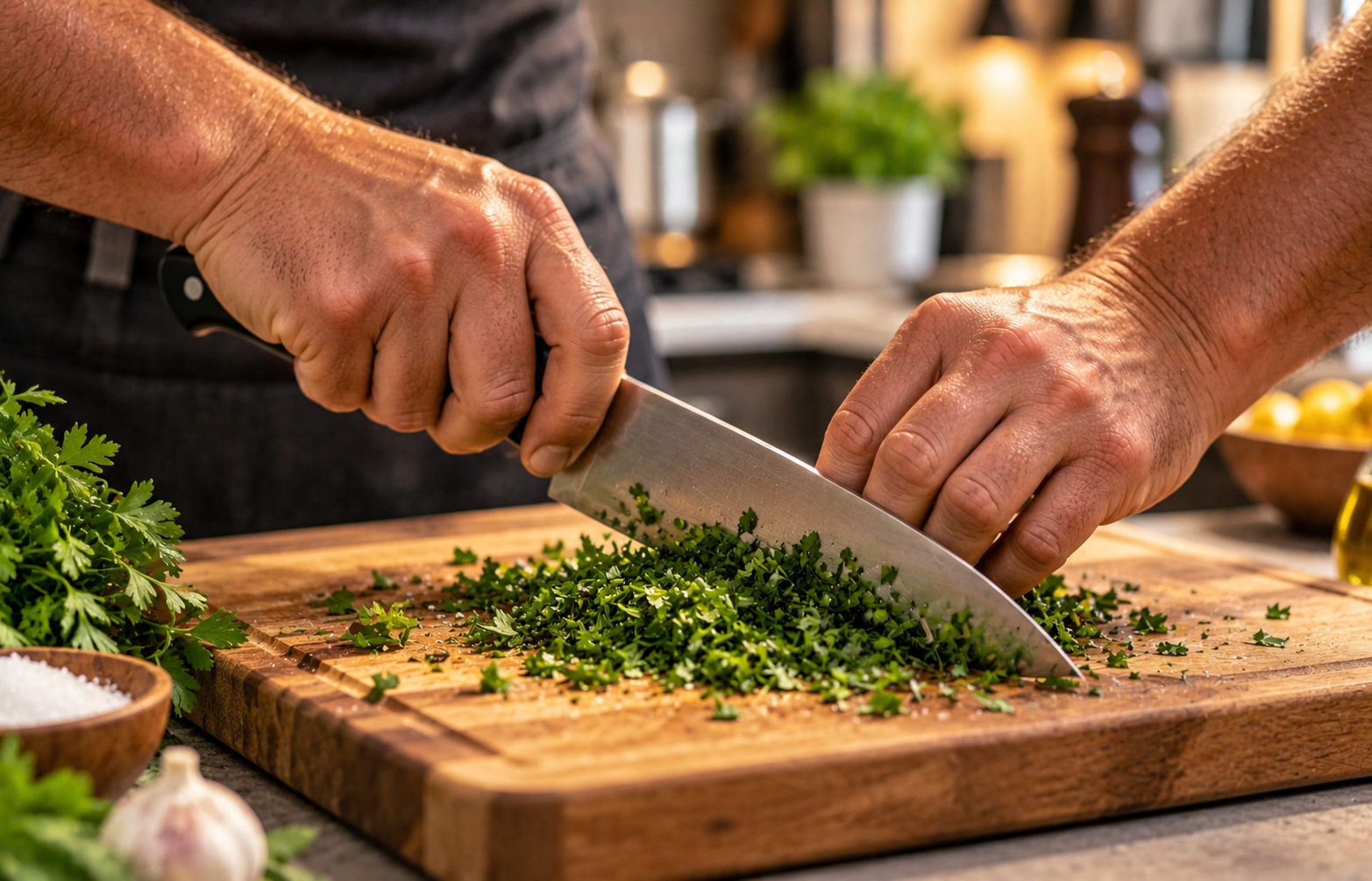
Good knife work is less about speed and more about control. A sharp blade, a flat side, and a safe grip make every cut faster and more consistent.
Knife work principles
- 1
Hone more, sharpen when needed
Honing realigns a knife's edge; sharpening removes material to create a new edge. They perform different jobs.
- 2
A sharp knife is easier to control
A dull blade requires more pressure and is more likely to slip unexpectedly.
- 3
Use the claw grip
Curl the fingertips of your guiding hand inward and use your knuckles to help guide the blade.
- 4
Create a flat surface first
Round vegetables can roll. Cut a stable flat side before continuing to chop.
- 5
Match the knife to the job
Use a chef's knife for general chopping, a paring knife for detailed work, and a serrated knife for bread and other suitable foods.
- 6
Let the blade do the work
Use controlled slicing or rocking motions instead of forcing the knife straight through ingredients.
- 7
Uniform cuts cook evenly
Ingredients of similar size generally finish cooking at approximately the same time.
- 8
Keep the cutting board stable
Place a damp towel or nonslip mat underneath a board that tends to slide.
- 9
Don't scrape with the sharp edge
Use the spine of the knife or a bench scraper to move chopped ingredients so you don't unnecessarily dull the cutting edge.
- 10
Never try to catch a falling knife
Move away and let it fall. A damaged knife is preferable to a serious hand injury.