Technique
Kitchen tips worth keeping
None of these are secrets. They are simply the habits that separate a good dish from a flat one, collected as we learned them.
Seasoning
Salt from height, taste at every stage
Seasoning at the end only seasons the surface. Add a pinch when the onions go in, again when the liquid does, and taste before it leaves the pan.
Seasoning principles
- 1
Salt in layers, not just at the end
Season throughout cooking so flavor develops inside the dish instead of sitting only on the surface.
- 2
Taste before adding more salt
Broth, cheese, soy sauce, cured meats, and packaged ingredients may already contain plenty of sodium.
- 3
Salt meat before cooking
Seasoning meat ahead of time gives salt time to penetrate rather than merely coating the exterior.
- 4
Wake up dried spices
Toast spices briefly in oil or a dry pan to release their aromatic compounds before adding liquids.
- 5
Finish with fresh herbs
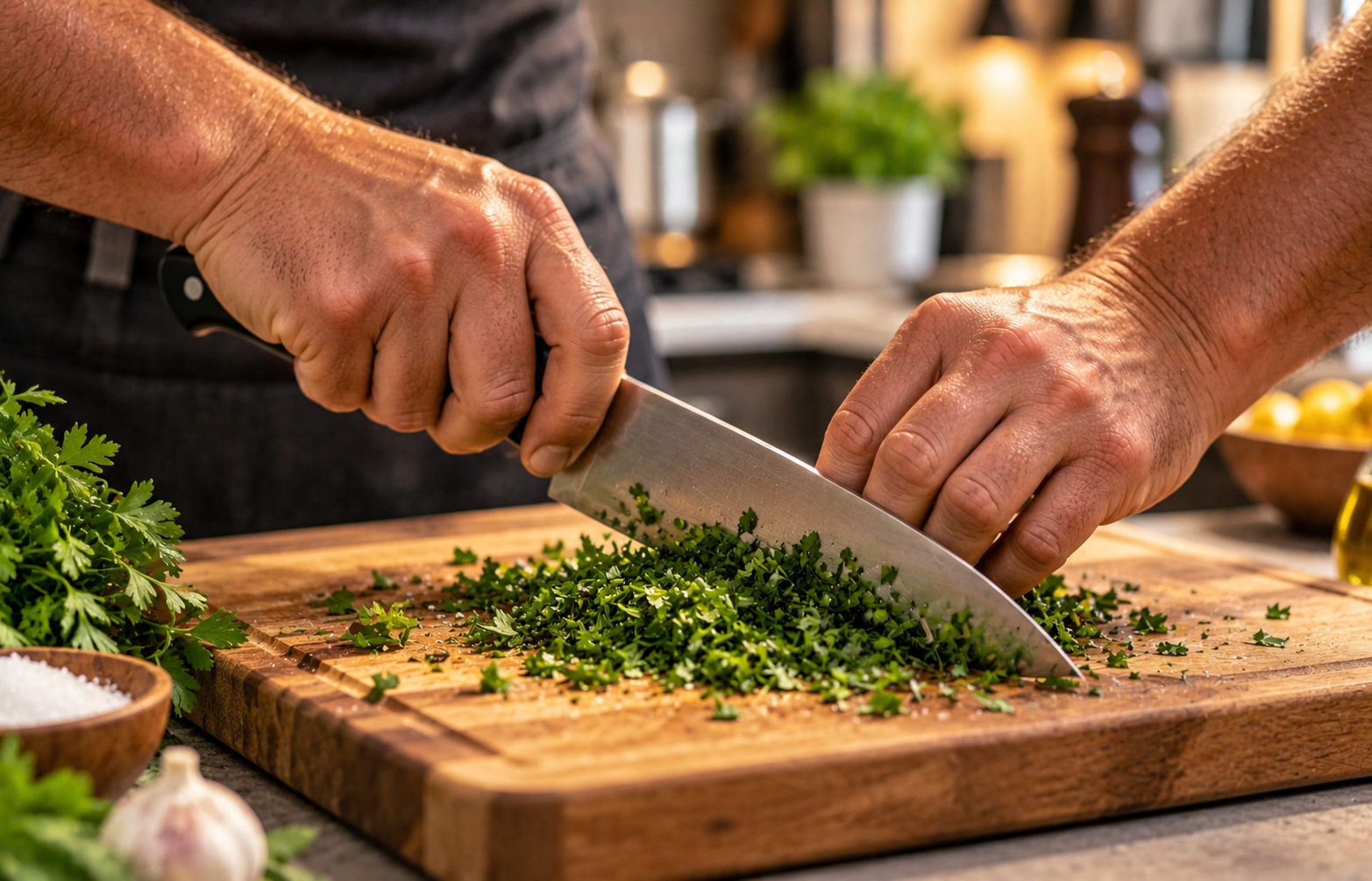
Add delicate herbs such as parsley, cilantro, and basil near the end to preserve their fresh flavor.
- 6
Use acid like seasoning
A squeeze of lemon or splash of vinegar can make a properly salted dish taste brighter without adding more salt.
- 7
Season cooking water
Pasta, potatoes, rice, and vegetables absorb flavor as they cook. Season their cooking liquid when appropriate.
- 8
Grind pepper fresh
Freshly ground pepper generally provides stronger aroma and more complex flavor than pre-ground pepper.
- 9
Remember that sauces reduce
As liquid evaporates, salt becomes concentrated. Season conservatively early when you plan to reduce a sauce significantly.
- 10
Taste one final time
Before serving, check salt, acidity, sweetness, heat, and richness. Small final adjustments can transform a dish.